
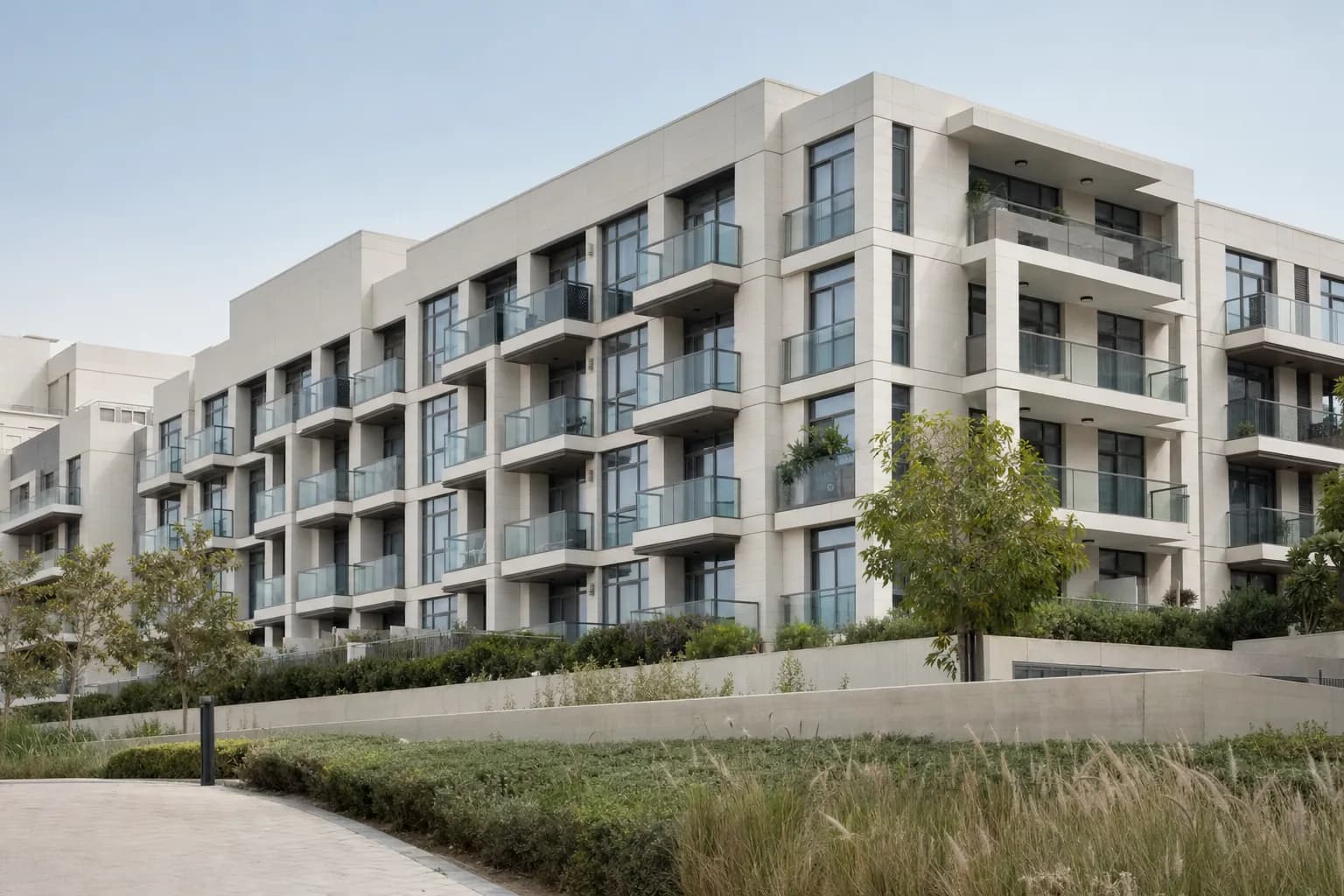
Bed Space in Dubai: Rules Under the 2026 Housing Law
Bed space in Dubai, a single bed rented inside a shared room, is legal only inside a unit that holds a Dubai Municipality permit under Law No. 4 of 2026. The law took effect on 26 August 2026, 180 days after its Official Gazette publication (Gulf News, 26 August 2026), and anyone renting out, managing or occupying a shared housing unit in Dubai now falls under it.
Existing operators have until 26 August 2027 to comply, with one possible extension from Dubai Municipality's Director General (Khaleej Times, 2026). This guide draws on Dubai Media Office's announcement (11 March 2026) and reporting from Gulf News, The National and Khaleej Times.
What is bed space in Dubai?
Bed space describes a single bed, or sometimes a curtained corner of a room, rented out as part of a larger shared unit. Dubai's shared housing law defines the wider category, shared housing, as accommodation where individuals or families occupy their own designated space inside a property while sharing facilities such as the kitchen, bathroom and living areas with other occupants (Gulf News, 26 August 2026).
The law covers six categories of property: apartments, detached houses, residential complexes, mixed-use buildings, townhouses and multi-storey buildings (Gulf News, 26 August 2026). It excludes collective labour accommodation, the staff housing employers provide for workers, which stays under separate rules. It is also different from a licensed holiday home, which lets short-stay guests under a Dubai Economy and Tourism licence rather than a Dubai Municipality shared housing permit.
What does Dubai's shared housing law say?
Law No. 4 of 2026, regulating the occupancy and management of shared housing in Dubai, was issued by Sheikh Mohammed bin Rashid Al Maktoum, Ruler of Dubai (Dubai Media Office, 11 March 2026). It was published in the Official Gazette on 27 February 2026 and took effect 180 days later, on 26 August 2026, applying in private development zones and free zones as well as the rest of the emirate (Gulf News, 26 August 2026).
The central rule is simple: no person or company can designate a unit for shared housing without a permit from Dubai Municipality, issued with the Dubai Land Department (Gulf News, 2026). Only the owner of the property or an establishment Dubai Municipality has authorised can lease a shared housing unit.
Six categories of occupant are recognised: families, individual women, individual men, female students, male students, and employees of government or private companies (Khaleej Times, 2026). Rent is paid monthly in advance by default, and electricity and water charges are included in the rent unless the landlord and occupant agree otherwise in writing (Khaleej Times, 2026). That is separate from a full, self-contained unit, where rent increases on renewal follow the RERA rental index instead.
How many people can legally share a unit?
This part of the law is still taking shape. Dubai Municipality sets the maximum number of occupants, the minimum space per resident and the shared facilities a permit requires, but exact numbers for studios and one or two-bedroom units had not been published, "a major uncertainty for would-be permit applicants" (The National, 3 September 2026).
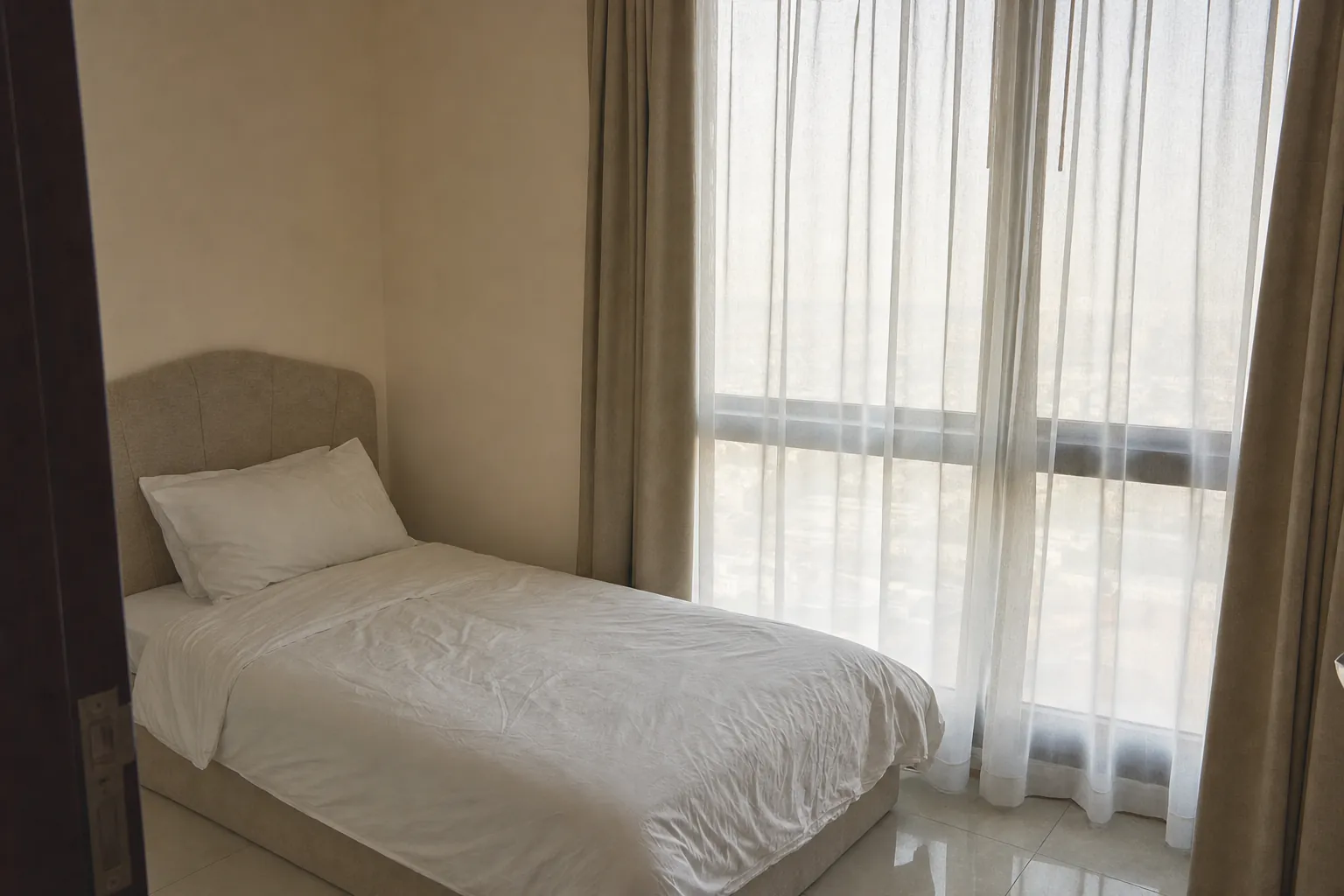
A separate, existing Dubai rule already sets a floor: at least five square metres of living space per resident in shared accommodation, an existing rule rather than a figure set by the new law (The National, 26 August 2026). That older standard applies while Dubai Municipality finishes the occupancy tables for Law No. 4 of 2026 permits. Confirm current numbers with Dubai Municipality rather than a figure quoted elsewhere.
What are the partition rules in Dubai?
Dividing a bedroom, living area or balcony to create more bed space is not allowed without a permit from Dubai Municipality. Unauthorised partitions, including ones built from wood or non-fire-rated gypsum board, are banned outright, because they block the room's escape route and the ventilation it was designed around (The National, 26 August 2026).
The rule follows a fire in a Dubai Marina residential block in June 2025 that affected more than 3,800 residents and exposed illegal partitions as a fire hazard (The National, 26 August 2026). Authorities had already been clamping down on illegal subletting and partitioned units across Dubai through 2025, before the new law formalised the permit system.
Can you sublease a bed space in Dubai?
No. An occupant cannot sublease their room or bed space, and cannot let another person reside in their allocated space and benefit from it (Gulf News, 2026). Only the owner or an authorised establishment may lease out a shared housing unit or any part of it.
This closes a gap that informal bed space listings used to sit in. Previously, a tenant on a standard tenancy contract might sublet a spare room without the owner's knowledge; that arrangement is now a violation, with fines starting at AED 500.
What happens if you break the rules?
Fines run from AED 500 to AED 500,000 for a first violation. A repeat violation within one year doubles the fine, up to a maximum of AED 1,000,000 (Gulf News, 26 August 2026; Khaleej Times, 2026).
Further measures can follow: suspending the activity for up to six months, cancelling the permit, revoking the trade licence, disconnecting utilities, or an Execution Judge ordering eviction (Khaleej Times, 2026). Anyone facing an enforcement decision has 30 days to file a written grievance, and only 7 days to challenge an eviction order (Khaleej Times, 2026). A suspended operator does not empty a unit overnight; residents get time to find alternative housing first (Gulf News, 26 August 2026).
Inspections are carried out by the Committee for the Supervision of Shared Housing in Dubai, which runs scheduled and surprise visits, usually triggered by a complaint or documented evidence of overcrowding or an unauthorised partition (Khaleej Times, 2026).
Key dates for landlords and operators
| Milestone | Date or term |
|---|---|
| Published in the Official Gazette | 27 February 2026 |
| Law takes effect | 26 August 2026 |
| Compliance deadline for existing operators | 26 August 2027 |
| Standard permit term | 1 year, renewable |
| Permit term on owner's request | 2 years |
| Renewal application deadline | 30 days before expiry |
Frequently asked questions
Is bed space legal in Dubai?
Yes, but only inside a unit that holds a Dubai Municipality permit under Law No. 4 of 2026. Offering bed space without a permit is a violation that can carry a fine from AED 500 to AED 500,000 (Gulf News, 26 August 2026).
Who can legally rent out a shared housing unit?
Only the property owner or an establishment Dubai Municipality has authorised (Gulf News, 2026). A sitting tenant cannot re-let their room or any part of the unit to someone else.
What is the deadline to bring an existing bed space unit into compliance?
Existing operators have one year from 26 August 2026, so until 26 August 2027 (Khaleej Times, 2026). Dubai Municipality's Director General can grant one extension if needed.
Can I add a partition to fit more beds in a room?
Only with a Dubai Municipality permit, and only using fire-rated materials. Wood or non-fire-rated gypsum board partitions are banned outright because they block escape routes and ventilation (The National, 26 August 2026).
Does the law cover staff or labour accommodation?
No. Collective labour accommodation, the housing employers provide for their workforce, is excluded and stays under separate rules.
How many people can legally live in one bedroom under the new law?
Dubai Municipality will set maximum occupancy and space-per-resident figures as part of the permit system, but those exact numbers had not been published (The National, 3 September 2026). Check directly with Dubai Municipality before signing a bed space agreement.
Exceptions and open questions
The law does not apply to collective labour accommodation, which Dubai Municipality continues to regulate separately (Gulf News, 2026). A licensed holiday home under a Dubai Economy and Tourism permit is a different arrangement again: it lets short-stay guests rather than long-term residents, so a DET licence does not substitute for a Dubai Municipality shared housing permit, and the reverse holds too.
Two points were open on 5 October 2026. Maximum occupancy and minimum space per resident had not been published; Dubai Municipality planned to announce these through its Services Guide (Khaleej Times, 9 September 2026). The Dubai Land Department's planned rental index for shared housing had not launched, and whether it would price by unit, room or bed space was unclear (Khaleej Times, 2026). Confirm any occupancy or rent figure seen elsewhere directly with the relevant authority before signing anything.
If you would rather have your own place, our studio rent by area page lists what a studio costs in 65 Dubai areas, from AED 2,083 a month in Deira.
How we checked this
Written by the AKT Real Estate research team (RERA ORN 15673, Business Bay, Dubai). Facts checked against the official sources below on 19 October 2026.
This article draws on Dubai Media Office's announcement (11 March 2026) and reporting from Gulf News, The National and Khaleej Times published between March and 9 September 2026, all read on 5 October 2026. The effective date, permit terms and the AED 500 to AED 1,000,000 penalty range are each confirmed independently in at least two of these outlets. The occupancy and space-per-resident figures could not be confirmed anywhere: The National (3 September 2026) and Khaleej Times (9 September 2026) both reported Dubai Municipality had not yet published them, so no number is given here. No public copy of the law's own text was found; Dubai's legislation portal returned no page at the address checked on 5 October 2026, so every provision above comes from the official announcement and press reporting listed rather than the law's own clauses.
Sources
- Dubai Media Office: Mohammed bin Rashid issues law regulating the management of shared housing (11 March 2026)
- WAM: Mohammed bin Rashid issues law regulating management, occupancy of shared housing in Dubai (2026)
- Gulf News: Dubai's shared housing law takes effect, fines of up to Dh1 million for repeat violations (26 August 2026)
- Gulf News: Dubai's new shared housing law, a complete guide for residents and owners (2026)
- The National: Dubai shared housing rules come into effect in bid to curb dangerous accommodation (26 August 2026)
- The National: What Dubai's new shared housing law means for tenants, landlords and operators (3 September 2026)
- Khaleej Times: Dubai shared housing, families and bachelors among eligible groups, rent to be paid monthly (2026)
- Khaleej Times: Crackdown on illegal sharing, Dubai housing law allows surprise, routine inspections (2026)
- Khaleej Times: Dubai's shared housing law, licensing details, requirements to be announced soon (9 September 2026)
AKT Real Estate helps tenants and landlords in Dubai stay compliant as rules like this one take effect, and helps buyers find the right property once they are ready to move from renting to owning. If buying is the next step for you, our guide to buying property in Dubai covers the process from offer to title deed.
This article is general information, current on its publication date. Rules and fees change; check with the relevant authority or a licensed adviser before acting.